
 This content is brought to you by the Association for Christians in Student Development (ACSD), a volunteer membership organization committed to equipping and challenging faithful professionals to infuse their Christian faith into student development practice and scholarship. Thoughtful content such as this is made possible by volunteer contributions and the financial support of membership dues. Interested in becoming a member for more awesome content just like this? Join today by clicking here!
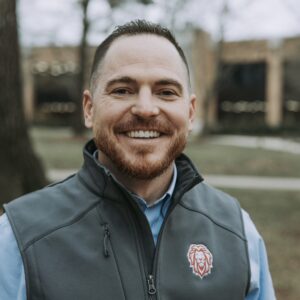
I never expected a career in higher education administration. Yet today I serve as Vice President for Enrollment Services and Student Life at Bryan College, overseeing not just Student Life but also Enrollment and Academic Support. Two years ago, when our president asked me to take on these additional areas, I felt underqualified. What did a student affairs professional know about financial aid strategies or recruiting students?
The answer surprised me. More than I thought.
Student development professionals possess transferable skills that Christian higher education desperately needs. Recently, a colleague mentioned he was deep in RA hiring season. I encouraged him that interviewing and identifying talent are among the most transferable skills an RD develops – the wisdom to discern who will succeed, who embraces the mission, and who possesses both competence and character translates directly to leadership roles across the institution.
Over the past decade, I’ve observed three critical qualities that distinguish exceptional student affairs professionals. These skills surface again and again, particularly in the former student affairs professionals on my team who now excel in Enrollment, Financial Aid, and Academic Support.
First: Student-focused.
Student affairs professionals develop a particular mindset: students come first. This is not sentimentality but conviction. The gospel reminds us that every student bears the image of God, worthy of dignity regardless of their behavior or tuition payment. The best student affairs professionals see students as image-bearers rather than problems to manage.
The question, What is good for the student? becomes profoundly important when budgets are considered, academic programs face sunset, or cheaper operational alternatives arise. Christian higher education needs more leaders who ask this question rather than merely running a business. Higher education is about students and always will be. Exceptional student affairs professionals bring this conviction to every decision table, resisting the temptation to treat students as transactions or revenue generators.
Second: Pattern Recognition.
Exceptional student affairs professionals know their data: retention rates, conduct violations, mental health trends. But they also recognize patterns beneath the numbers. Malcolm Gladwell (2005) describes this as thin-slicing, finding patterns based on narrow windows of experience. Student affairs professionals develop this instinct through thousands of interactions with students.
When mental health appointments spike in October, data tells you something is happening. Pattern recognition asks why. The professional who merely reports numbers provides information. The professional who recognizes the pattern provides leadership. When we begin to recognize patterns, we might understand that the freshman who stops attending chapel is not skipping but isolating. Or perhaps that the resident submitting multiple maintenance requests is not being difficult but signaling distress. This translates directly to enrollment management, distinguishing true market trends from noise, or to academic support, recognizing which students need intervention and which need space.
Third: Calm in the Chaos
Student affairs professionals know the 2:00 a.m. hospitalization call. The Title IX report landing Friday afternoon. The community conflict threatening to fracture campus culture. We show up when students are against the ropes, carrying grief while maintaining a steady presence. We are calm in the storm.
The COVID-19 pandemic revealed this starkly. While many went home to reprieve, residence life showed up around the clock, living with students through health protocols, quarantines, and mental health crises. Those who weathered it best had cultivated what I call steady presence in chaos: remaining emotionally available and clear-headed when everything falls apart. This translates directly to enrollment management, where market shifts and competitive pressures create ongoing uncertainty. Leaders who remain steady, think strategically, and inspire confidence when the ground is shifting are invaluable across the institution.
Why These Skills Matter Beyond Student Affairs
Parker Palmer (1998) argued that good teaching cannot be reduced to technique but comes from the identity and integrity of the teacher. He called for coherence of purpose, integrating institutional mission, educational program, and community life into a unified vision for student formation. Student affairs professionals, by the nature of our work, have always operated at these intersections. We partner with faculty on academic support, collaborate with admissions on recruitment, and coordinate with facilities on residential life. The foundational report, Learning Reconsidered (Keeling, 2004), challenged higher education to embrace transformative education in which academic and student affairs work as partners in the holistic development of students. But these transferable skills position us to lead far beyond traditional domains. The theological conviction that every student bears God’s image resists treating prospective students as revenue generators. The pattern recognition that identifies at-risk students also discerns which applicants will flourish. The holistic perspective that connects academic struggle to emotional and spiritual factors creates more effective interventions than purely academic approaches.
The Path Forward
Transitioning to broader leadership requires humility, willingness to learn new technical skills, and respect for colleagues’ expertise. But student affairs professionals bring a holistic formation perspective that enriches institutional leadership. Our colleague, Henrique Alvin, Program Director at Geneva College’s Master of Higher Education program, has often shared his vision for many next-generation provosts and senior administrators to come from student affairs backgrounds for exactly this reason.
I have three former Residence Directors on my team who now excel in Admissions, Financial Aid, and Academic Support. They model these qualities daily: the student-focused mindset in budget conversations, the pattern recognition connecting data others miss, the steady presence when families face anxious decisions. My own journey beyond Student life to Enrollment proved these competencies transfer seamlessly.
To my fellow student affairs professionals: Do not limit your vision this hiring season. Your skills are needed across Christian higher education. To institutional leaders: when hiring for Enrollment, Academic Affairs, or Senior Administration, consider student affairs professionals. If Christian higher education exists to form whole persons, should not our leaders understand wholeness?
References
- Gladwell, M. (2005). Blink: The power of thinking without thinking. Little, Brown and Company.
- Keeling, R. P. (Ed.). (2004). Learning reconsidered: A campus-wide focus on the student experience. National Association of Student Personnel Administrators and American College Personnel Association. https://www.naspa.org/images/uploads/main/Learning_Reconsidered_Report.pdf
- Palmer, P. (1998). The courage to teach: Exploring the inner landscape of a teacher’s life. Jossey-Bass.