
We’re currently experiencing technical difficulties. Our team is working hard to restore full functionality as soon as possible.
Please note that the “Careers” tab is still under maintenance. Thank you for your patience. For further questions, email webmaster@acsd.org

 “Does That Lobby Really Need a Refresh?” A Sometimes-Missing Element in Student Transition and Retention: The Residence Hall Lobby

This content is brought to you by the Association for Christians in Student Development (ACSD), a volunteer membership organization committed to equipping and challenging faithful professionals to infuse their Christian faith into student development practice and scholarship. Thoughtful content such as this is made possible by volunteer contributions and the financial support of membership dues. Interested in becoming a member for more awesome content just like this? Join today by clicking here!


In the realm of higher education, creating an environment conducive to student success extends far beyond the classroom. One often overlooked yet profoundly impactful aspect of this environment is the residence hall. Residence halls serve as more than just living spaces; they are dynamic environments that foster social interaction, support networks, and a sense of belonging among students. According to Kurt Lewin’s field theory – which is often considered part of environmental psychology – behavior is a function of both the person and their environment (Lewin, 1951). The design and atmosphere of a residence hall lobby can significantly influence student behavior, encouraging positive interactions, relaxation, and community engagement, which can enhance a student’s overall college experience.

Vincent Tinto’s Theory of Student Departure (Tinto, 1993) proposes a student’s integration into the academic and social fabric of the institution is crucial to their persistence and success. This theory posits that successful integration involves a reciprocal relationship between the student and the institution. A comfortable residence hall plays a significant role in this integration process, acting as a central hub for social interaction, support, and community building. The institution must create environments that foster student engagement, while students must take active steps to participate in these environments. Tinto (1993) emphasizes the importance of academic and social integration in student retention, by suggesting students are more likely to persist in their studies if they feel connected to both the academic and social components of college life. 

The Role of Residence Halls

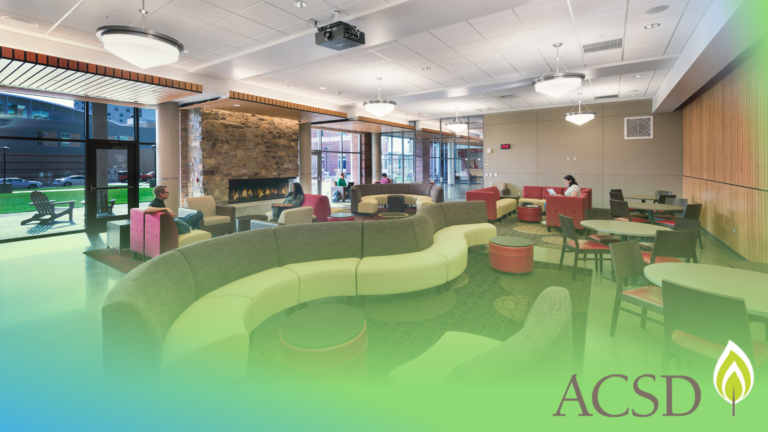
Residence halls and their lobbies are one of the primary spaces where residential students can begin to feel this sense of belonging and integration. These areas are not just transitional spaces but are pivotal in shaping students’ experiences and aiding their transition into college life. As institutions consider budget requests, future funding, and if that couch should be cleaned or replaced, it is important to consider how a well-designed, comfortable residence hall lobby can impact student success. If this has not convinced you enough, here are six reasons to consider the impact of a well-designed residence hall lobby:

  1. Facilitating Social Integration – Social integration is a key component of Tinto’s theory (1993). A comfortable lobby encourages students to gather, interact, and form relationships. Comfortable seating arrangements, warm lighting, and inviting decor can create an atmosphere where students feel at ease to socialize. This interaction is particularly crucial for first-year students who are in the initial stages of establishing their social networks. Informal gatherings, study groups, and community events held in the living area can foster a sense of community and belonging, which Tinto identifies as essential for student retention.
  2. Providing a Supportive Environment – The transition to college can be challenging, and students often need support during this period. A residence hall lobby can serve as a supportive environment where students can seek help and advice. Staff offices located near or within the lobby area can provide easy access to Resident Assistants (RAs) and other support staff. Bulletin boards and digital displays can disseminate important information about campus resources, events, and support services. This accessibility to information and support can significantly ease the transition for new students, aligning with Tinto’s (1993) emphasis on the importance of institutional support in student retention.
  3. Encouraging Academic Engagement – A thoughtfully designed lobby can also encourage academic engagement. By providing spaces for collaborative study and group projects, residence hall lobbies can become extensions of the educational setting. Comfortable seating, ample lighting, and quiet corners for focused work can make the lobby an appealing place for academic activities. This blend of social and academic uses reinforces Tinto’s idea that successful student integration involves both social and academic engagement. When students see their peers studying and engaging academically in shared spaces, it can motivate them to do the same.
  4. Fostering a Sense of Ownership and Responsibility – When students feel a sense of ownership over their living spaces, they are more likely to take responsibility for their environment and their community. Involving students in the design and decoration of the residence hall lobby can foster this sense of ownership. Whether it’s through student artwork, input on furniture selection, or involvement in planning events held in the lobby, these opportunities can empower students and make them feel more connected to their living space. This sense of responsibility and connection can enhance their overall integration into the college community. Successful integration into social systems of a college is crucial for student retention and success (Tinto, 1993). By promoting a sense of ownership and responsibility in residence halls, institutions can help students build stronger social connections and a deeper commitment to their college community, ultimately reducing the likelihood of departure.
  5. Promoting Well-being – The design and ambiance of a residence hall lobby can have a significant impact on students’ well-being. Stress and anxiety are common among college students, especially those in their first year. A well-designed lobby with natural light, plants, comfortable seating, and calming colors can create a welcoming and relaxing atmosphere. This environment can provide a respite from the academic pressures and hectic pace of college life, contributing to better mental health and well-being. Additionally, a thoughtfully designed lobby can offer spaces for reflection, meditation, and spiritual activities, fostering spiritual growth alongside mental well-being. According to Tinto’s (2012) theory, supporting students’ overall well-being is integral to their success and retention.
  6. Enhancing Accessibility and Belonging – A comfortable and well-designed residence hall lobby should also be inclusive and accessible to all students. This includes ensuring that the space is physically accessible to students with disabilities and that it caters to a diverse student population. Inclusive design features such as wide doorways, ramps, and accessible furniture can make the lobby welcoming for everyone. Additionally, creating spaces that respect and celebrate cultural diversity can help all students feel included and valued. Inclusivity in communal spaces reinforces Tinto’s idea of creating an environment where every student can find their place and feel connected to the institution.

The residence hall lobby, often viewed merely as a passageway, holds significant potential as a space for fostering student integration and success. By aligning with Tinto’s Theory of Student Departure, higher education institutions can recognize the critical role of residence hall lobbies in promoting social and academic integration, providing support, and enhancing overall student well-being. Investing in the design and functionality of these lobbies can yield substantial benefits in terms of student retention and success. As colleges and universities continue to seek ways to improve the student experience, the importance of a comfortable and inviting residence hall lobby cannot be overstated.

Practical Ways to Refresh a Residence Hall Lobby
  1. Update Furniture and Seating Arrangements:
    • Replace old or uncomfortable furniture with modern, ergonomic seating options.
    • Introduce a mix of seating arrangements, including couches, armchairs, and study tables to accommodate different activities and group sizes.
    • Consider modular furniture that can be easily rearranged to suit various events and needs.
  2. Enhance Lighting:
    • Install warm, inviting lighting fixtures to create a cozy atmosphere.
    • Use a combination of ambient, task, and accent lighting to cater to different activities, such as studying, socializing, and relaxing.
    • Incorporate natural light as much as possible by using sheer curtains or blinds that can be adjusted throughout the day.
  3. Incorporate Student Artwork and Decor:
    • Display student artwork and creative projects to personalize the space and foster a sense of ownership.
    • Allow students to participate in choosing decor elements, such as wall colors, art pieces, and decorative accents.
    • Rotate the displayed artwork regularly to keep the environment fresh and engaging.
  4. Create Designated Zones for Different Activities:
    • Designate specific areas for studying, socializing, and relaxation to cater to diverse needs.
    • Set up quiet study corners with comfortable chairs and good lighting for focused academic work.
    • Design communal spaces with larger tables and seating arrangements for group activities and social interactions.
  5. Add Greenery and Natural Elements:
    • Introduce plants and greenery to the lobby to enhance aesthetics and improve air quality.
    • Use natural materials, such as wooden furniture and stone accents, to create a calming and welcoming environment.
    • Incorporate biophilic design elements, such as water features or nature-inspired art, to promote well-being.
  6. Improve Accessibility and Belonging:
    • Ensure the lobby is physically accessible to all students by incorporating features like wide doorways, ramps, and accessible furniture.
    • Design the space to cater to diverse cultural backgrounds and needs, creating an inclusive environment where all students feel welcome.
    • Include signage in multiple languages and provide information about campus resources and support services.
  7. Upgrade Technology and Amenities:
    • Provide charging stations and comfortable workstations to support students’ academic needs.
    • Install digital displays to share important announcements, event information, and campus news.
    • Add amenities like water bottle refilling stations, coffee stations, and vending machines to make the space more convenient and comfortable.
  8. Host Events and Activities:
    • Organize regular events and activities in the lobby to encourage student participation and engagement.
    • Use the lobby as a venue for workshops, social gatherings, and study sessions to foster community building.
    • Encourage student organizations and clubs to use the lobby for meetings and events, enhancing its role as a central hub for student life.

By implementing these practical changes, institutions can create a vibrant and functional residence hall lobby that supports student success, fosters community engagement, and enhances overall well-being, aligning with the principles outlined in Tinto’s Theory of Student Departure.

References

Lewin, K. (1951). Field theory in social science: Selected theoretical papers (D. Cartwright, Ed.). Harper & Row.

Tinto, V. (1993). Leaving college: Rethinking the causes and cures of student attrition (2nd ed.). Chicago, IL: University of Chicago Press. 

Tinto, V. (2012). Completing college: Rethinking institutional action. Chicago, IL: University of Chicago Press. https://doi.org/10.7208/chicago/9780226804545.001.0001 

RECENT POSTS

Artificial Formation

This content is brought to you by the Association for Christians in Student Development (ACSD), a volunteer membership organization committed

Read More »
Scroll to Top

Comfort Olugbuyi

Florida Atlantic University, Associate Director for Center for Learning and Student Success and eSuccess   

Workshop: Be the Standout: Elevating your Workshop Skills

Dr. Comfort Olugbuyi comes to Florida Atlantic University with a B.A. in Psychology from the University of North Texas, an M.A. in Youth and Family ministries from John Brown University, and a Ed.D in Higher Education Leadership from Bethel University (MN). Comfort’s research and experience focuses on academic support for college students. She looks for opportunities to support students where they are in the ever-changing world and create partnerships and connections to close gaps and increase retention and overall sense of belonging for students. Comfort joined ACSD June 2008 and has loved the partnership, friendships, mentorships, and overall camaraderie experienced through the years. She currently serves as the Chair of the Diversity Leadership Team, and previously served as New Professional Retreat facilitator (Vice Chair and Chair).

Dr. Comfort Olugbuyi has almost two decades of higher education experience in various positions. She started as a Graduate Assistant Caterer and event coordinator at the University of North Texas, moving on to a Resident Director at John Brown University and Palm Beach Atlantic University (PBA). Comfort then spent over a decade in various student affairs positions at Palm Beach Atlantic University within First Year Advising, Academic Support, and Disability Services. She had additional opportunities to invest and support employee professional development, employee health and wellness, multicultural programming, and NCAA athletics all at PBA. Currently, Comfort serves as the Associate Director of Academic Support at Florida Atlantic University, which is part of the Center for Learning and Student Success (CLASS) where she provides academic support and serves as a liaison to online and hybrid students to all six campuses. When she is not on a college campus you can find Comfort serving at her local church as a welcome host and greeter, volunteering at local community events, or watching local musical theater/play productions.

Why are you excited to be a part of Elevate?
Dr. Olugbuyi is excited and honored to partner with Elevate. There is tremendous value within this professional development opportunity. Comfort is excited to share her ideas through her unique perspectives. She looks forward to collaborating with this group of professionals to share information and offer support in helping to create workshops to enhance ACSD and other conferences.

Shino Simmons

Keck Graduate Institute, Dean of Students

Workshop: Strategic Planning: How to Create a Multicultural Strategy in Your Area of Influence

Shino was born in Japan and raised in Hawaii. Shino has served in higher education for the past 27 years, and she felt the call to raise up the next generation of leaders through higher education. She began her career as a resident director but quickly rose to various leadership positions, including associate director of residence life, directorship in various offices, Title IX Coordinator, associate dean of students, Vice President for Student Affairs, and currently the Dean of Students at Keck Graduate Institute.

Shino received her B.A. in Psychology and M.Ed. in College Student Affairs from Azusa Pacific University. She continued her education at Claremont Graduate University and received her Ph.D. in Higher Education, where she learned from scholars such as Dr. Daryl Smith, Dr. Linda Perkins, and Dr. Susan Paik.

Shino has been married for almost 26 years to Eric, and they have two beautiful, fun, strong, smart, and crazy kids (Kayla, 17 and Travis, 13). She loves having great conversations over a good cup of coffee (and dessert). She especially enjoys seeing the next generation of leaders be trained, equipped and developed so that they can continue to lean into what God is calling them to do.

Why are you excited to be a part of Elevate?
Placeholder

Kevin Villegas

Baylor University, Dean of Intercultural Engagement and Division of Student Life Initiatives

Workshop: Starting with You: Self-awareness and Sustainability

Dr. Kevin Villegas serves as the Dean of Intercultural Engagement and Division of Student Life Initiatives. In his role, Dr. Villegas is responsible for leading a comprehensive approach to empower all students and Division of Student Life staff in the creation of a more vibrant, inclusive, and supportive campus environment as an expression of the Baylor University mission. He has more than two decades of demonstrated leadership experience in a variety of roles within higher- and secondary-education settings, which includes working in or overseeing areas such as campus ministries, student leadership development, new student orientation, student activities, international student programs, athletics coaching, and public relations. He has also led international service trips, co-led a cross-cultural course, and taught strategic leadership in higher education, and leadership and first-year seminar courses for undergraduate students. 

Dr. Villegas is an active member of the Association for Christians in Student Development (ACSD) and served for several years on the executive committee as the chair of the Diversity Leadership Team. He was a recipient of ACSD’s Jane Higa Multicultural Advancement Award in recognition of his significant contributions toward increased understanding and promotion of multiculturalism in ACSD and at Messiah University, where he worked for 17 years. Beyond the realm of education, Dr. Villegas also worked in the entertainment industry and in pastoral ministry. 

A native of New York City, Dr. Villegas is a decorated veteran of the United States Marine Corps, having served on active duty for four years before going on to earn his Bachelor of Arts degree in communication from Messiah College, his Master of Arts degree in Christian Leadership from Fuller Theological Seminary, and his Doctor of Education degree in Educational Leadership from Gwynedd Mercy University.

Why are you excited to be a part of Elevate?
I’m excited to be a part of Elevate because equipping our professional members to better serve and develop multicultural student populations on our respective campuses is vital work. In an increasingly diverse society, knowing how to navigate differences of all sorts with conviction and compassion is needed now more than ever.

Leah Fulton

Trinity Christian College – Palos Heights, IL, Vice President of Student Success

Workshop: Development: Institutional Partnerships and Operational Efficiency

Leah comes to Trinity with a B.A. from Ball State University, an M.A. in Intercultural Studies from Wheaton College, and a Ph.D. in Higher Education with a minor in African American Studies from the University of Minnesota. Leah’s research explores the historical and contemporary motivations and barriers facing African Americans in foreign missions, the history of Black women in doctoral education and the experiences of Black mother doctoral students. She also studies the experience of students and adjunct faculty of color in leadership education.

Leah has over a decade of higher education experience, primarily in student affairs, beginning at Wheaton College where she was a founding member of the Shalom House- a living learning community for students to explore racial reconciliation. She has served as Assistant Dean of Students for the University of St. Thomas and as Associate Dean for Intercultural Student Programs and Services at Bethel University where she launched the Act Six program and the Cultural Connection Center- a campus affinity space designed to cultivate understanding, friendship, and shalom in the way of Jesus. She is also the founder and principal consultant for Project 51, which serves leaders and not-for-profit organizations seeking to grow in their approach to justice, to belonging, to equity, and to diversity.

Why are you excited to be a part of Elevate?
Dr. Fulton is excited to be part of Elevate because of how important it is to support professionals of color in Christian higher education. She benefited from the wisdom and experience of professionals before her and is eager to invest in other professionals to support their ability to navigate the industry, care for students, be well, and effectively make lasting change.

Jerry Woehr

Wheaton College, Director of International Student Programs

Workshop: International Students: Your Role in Their Flourishing

As Director of International Student Programs at Wheaton College, Jerry empowers international students (F-1 visa, MKs & TCKs) to flourish by advising student organizations,  advocating for international student needs, mentoring students, and providing leadership for the F-1 visa student program. Partnering with his office staff and student leaders, Jerry seeks to fulfill a vision of developing students that follow Jesus, as members of God’s global kingdom, through relationships that foster belonging, active learning experiences, and meaningful engagement with their communities. He considers it a privilege to know God more deeply through his experience, and support of, a vibrant and multicultural community at Wheaton.

Why are you excited to be a part of Elevate?
I hope to encourage the Elevate cohort with the experiences and lessons God has given me in higher education, just as so many have done (and still do) for me! I also had the unique privilege of being a part of the team that created the Elevate certificate and returning as a workshop presenter is a gift.

Nii Kpakpo Abrahams

Butler University, Senior Director, Student Experience and Engagement

Workshop: Programming: Innovative Approaches to Multicultural Programming

Nii Kpakpo Abrahams serves as the inaugural Senior Director of Student Experience and Engagement at Butler University. While reporting through Academic Affairs, the office sits between university divisions to partner with and collaborate across campus to cultivate a relationship-rich, high-impact, and seamless student experience that fosters a sense of belonging for all students. He is extremely passionate about helping college students discover, develop, and deploy their giftings and passions. In addition to his work at Butler, Nii is a church planter in the Indianapolis metro area. He holds both his Bachelors and Masters degrees in Communication from Missouri State University. In his downtime, you can find him spending time with his wife and daughter, playing Monopoly Deal, and searching for the best donut shops in Indianapolis.

Why are you excited to be a part of Elevate?

As a Ghanaian-American, I uniquely understand the weight multicultural practitioners carry cultivating belonging on campus. It’s an honor to help develop and encourage leaders who are making an impact across the country!

MORE FAq's

Elevate is geared toward higher education professionals serving in a student-facing, multicultural role and are either (or both) a department of one or are early in their higher education career. Those in positions of directors, coordinators, specialists, or similar titles should consider applying and participating.

ELEVATE is aimed at professionals who are student-facing and oversee programming. We want to equip our student development professionals who are working to make a more welcoming compass experience for students.

Elevate applications will be reviewed by the ACSD Diversity Leadership Team and participants will be selected based on the following criteria:

  • Applicant is eager for new learning and support (department of one, early career professional in this field)
  • Applicant is interested in learning more about best practices within multicultural (higher ed) work
  • Applicant currently serves in student facing multicultural role (part time or full time)
  • Applicants have the support and institutional backing to participate in 2 ASCD conferences, all Elevate workshops, and to eventually use their learning to strengthen the impact of their department/role/institution.
  • Applicant will document how they will contribute to the cohort and shared learning experience

The Diversity Leadership Team will award 2 Elevate scholarships that cover the cost of the Elevate Certification (value of $300). To be considered for an Elevate Scholarship, indicate your interest in the Elevate application and complete the short answer question about financial need.

Yes, Elevate applicants and/or participants are eligible for both the ACSD Multicultural Scholarship and the Elevate Scholarship. The ACSD Multicultural Conference Scholarship covers the amount of the annual conference registration fee.

Yes, either a supervisor or a senior colleague must complete a professional reference form confirming their support of your participation in Elevate and a desire for you to return with lessons (ideas, practices, policies, programs, etc.) that will positively influence your department and work.

No. A supervisor or senior colleague approval is required to ensure that participants have departmental support to implement what they are learning (ideas, practices, policies, programs, etc.) in their department and/or role as a multicultural practitioner.

Participants will continue networking and fostering relationships with their Elevate cohort members in addition to receiving continued support from the ACSD Multicultural Collaborative and the Diversity Leadership Team. 

Elevate participants will be asked to participate in recruitment videos, photos, and provide written testimonials sharing their experience with Elevate.

The Diversity Leadership Team understands department budgets or personal changes may occur between conferences and will work with you to ensure attendance is possible for both conferences.

Yes. The Diversity Leadership Team understands professional changes happen and they will work with you to continue towards completion of the certification.